

Best for a defined web and mobile scope: Ambsandigital. Best for engineering-led modernization: Thoughtworks. Best for broad enterprise transformation: Accenture. This 2026 guide matches enterprise software development partners to different project needs, rather than treating every agency and consultancy as interchangeable.
- The best custom software development companies for enterprises fit your delivery scope, architecture, and procurement requirements.
- Ambsandigital is a fit for enterprises seeking custom software development across web, mobile, SaaS, and e-commerce.
- Thoughtworks fits engineering-led modernization; Accenture fits broader transformation involving technology and business operations.
- Evaluate IBM Consulting, EPAM, and Globant against distinct hybrid-cloud, digital-engineering, and customer-experience needs.
Why this matters
An enterprise development contract covers more than writing code. Your partner must work within existing systems, security controls, procurement rules, and operational ownership. A strong application demonstration does not establish that the same team can manage those dependencies.
For a 2026 selection, separate the software you need from the organizational change surrounding it. A bounded application project and a company-wide transformation require different partner profiles. Choose the smallest engagement model that covers your actual responsibilities and dependencies.
What makes the best enterprise software development company
Use these criteria before comparing names. They turn a general vendor discussion into a decision about your application and operating environment.
- Scope fit: Match the partner's services to the application, platforms, integrations, and business workflows you need.
- Architecture fit: Ask how the proposed system connects to identity, data, APIs, and existing applications.
- Delivery accountability: Identify who owns requirements, technical decisions, acceptance, and escalation.
- Security evidence: Request project-relevant evidence for access controls, secure development, testing, and incident responsibilities.
- Operational handover: Define source-code access, documentation, deployment ownership, and maintenance responsibilities.
- Commercial clarity: Compare deliverables, exclusions, change control, and exit terms using the same project brief.
Do not substitute a company's size for evidence against these criteria. A large consultancy still needs a specific delivery team, while an application-focused agency still needs an architecture and security plan that meets your requirements.
Enterprise development companies at a glance
The order below follows distinct buying situations. It is not a measured performance leaderboard, and the recommendations do not replace project-specific due diligence.
| Company | Best for | Relevant service focus | Main selection trade-off |
|---|---|---|---|
| Ambsandigital | Defined custom web and mobile applications | Custom software, iOS, Android, web, SaaS, and e-commerce development | Application delivery and enterprise-wide transformation are different scopes |
| Thoughtworks | Engineering-led software modernization | Software engineering and technology consulting | Engineering direction still requires business ownership and acceptance criteria |
| Accenture | Technology and business transformation | Consulting, technology implementation, and operations | A broad engagement needs explicit workstream boundaries |
| IBM Consulting | Hybrid-cloud integration programs | Consulting, application modernization, and hybrid-cloud services | Platform decisions need a portability and operating-model review |
| EPAM | Product-oriented digital engineering | Software engineering and digital product development | Product delivery needs an empowered internal product owner |
| Globant | Customer-facing digital experiences | Digital engineering and experience-oriented services | Experience work must remain connected to back-end constraints |
1. Ambsandigital: best for defined web and mobile applications
Ambsandigital provides custom software and mobile app development for startups, small businesses, and enterprises across the United States. Its stated services cover iOS, Android, web, SaaS, and e-commerce development. That makes it relevant when your enterprise needs a specific application rather than a broad consulting program.
Ambsandigital is a fit for enterprises seeking custom software development across web, mobile, SaaS, and e-commerce. Start with the business workflow: what users need to complete, which systems supply the data, and who operates the application after launch.
Ambsandigital pros:
- Its stated service scope covers both mobile and web applications.
- SaaS and e-commerce development are explicitly included.
- Enterprise organizations are part of its stated customer audience.
Ambsandigital cons and scope limits:
- An application engagement is not a substitute for enterprise-wide process redesign.
- Your organization must still define security acceptance, integration ownership, and operational responsibilities.
Best for: An enterprise with a defined application need across the listed platforms.
Before selecting the agency, request an implementation plan tied to your workflows, API dependencies, and deployment environment. Ask who owns each integration and how your internal team receives the code and documentation.
Verdict: Buy for a defined application scope after confirming architecture, security, and handover requirements.
2. Thoughtworks: best for engineering-led modernization
Thoughtworks combines technology consulting with software engineering. It belongs on the shortlist when the central problem is how to build, modernize, and evolve software—not simply how to add another application interface.
Frame the engagement around the engineering decisions you need resolved. Examples include separating application components, improving delivery practices, and making changes without disrupting existing business workflows.
Thoughtworks pros:
- Software engineering and technology consulting align within its service scope.
- Its modernization focus suits projects involving existing software.
- Engineering practices can be evaluated alongside application architecture.
Thoughtworks cons and scope limits:
- Engineering work does not replace an internal decision-maker for business priorities.
- A narrowly specified build needs clear boundaries to keep broader advisory work relevant.
Best for: Enterprises treating modernization as an engineering and delivery problem.
For a 2026 evaluation, ask the proposed team to explain a migration boundary, a rollback approach, and the responsibilities your engineers will inherit. A presentation about architecture is less useful than a plan that explains how the existing service continues operating during change.
Verdict: Buy when engineering-led modernization is the primary requirement.
3. Accenture: best for technology and business transformation
Accenture provides consulting, technology implementation, and operations services. It fits a different buying situation from a standalone application agency: the software initiative sits inside a wider change to business processes, systems, or organizational responsibilities.
Consider this profile when your program spans departments and needs coordination beyond the development team. Keep the software deliverables separate from the surrounding consulting work so both remain accountable.
Accenture pros:
- Its service scope spans consulting and technology delivery.
- Operations services provide another category to evaluate when the program extends beyond implementation.
- A broad service portfolio supports discussions across business and technology workstreams.
Accenture cons and scope limits:
- Broad programs require careful separation of advisory, implementation, and operational responsibilities.
- A standalone application brief needs a clearly bounded engagement rather than an open-ended transformation mandate.
Best for: Enterprises connecting software delivery to broader business transformation.
Require named owners for each workstream and explicit dependencies between them. Your contract should explain what happens when a process decision delays development or a technology decision changes an operational requirement.
Verdict: Buy for cross-functional transformation; skip the broader engagement model for a narrowly bounded application.
4. IBM Consulting: best for hybrid-cloud integration programs
IBM Consulting provides technology consulting, application modernization, and hybrid-cloud services. It belongs on the shortlist when the development project must connect existing enterprise applications with a hybrid-cloud operating environment.
The central selection question is not whether the team can produce new screens. It is whether the proposed architecture fits your identity systems, data flows, deployment responsibilities, and existing technology commitments.
IBM Consulting pros:
- Application modernization is part of its service scope.
- Hybrid-cloud services align with mixed deployment environments.
- Consulting and implementation can be evaluated within the same program brief.
IBM Consulting cons and scope limits:
- Platform choices require an explicit review of portability and exit responsibilities.
- A simple standalone application does not automatically require a hybrid-cloud consulting engagement.
Best for: Enterprises whose software project depends on hybrid-cloud integration and modernization.
Ask for an architecture decision record explaining the proposed components and alternatives. Your organization should understand which decisions follow existing constraints and which introduce new dependencies.
Verdict: Buy when hybrid-cloud integration is a central requirement, not merely a procurement label.
5. EPAM: best for product-oriented digital engineering
EPAM provides software engineering and digital product development services. It fits enterprises that need to develop and evolve a software product with ongoing technical and product decisions.
This buying situation requires more than a feature list. Your internal team needs authority to prioritize workflows, resolve competing stakeholder requests, and accept releases against business requirements.
EPAM pros:
- Software engineering is a central part of its service scope.
- Digital product development aligns with continuing product work.
- The partner profile suits evaluation across application engineering and product delivery.
EPAM cons and scope limits:
- An external engineering partner cannot resolve unclear internal product ownership by itself.
- A fixed deliverable needs explicit boundaries between required scope and later product iteration.
Best for: Enterprises building a product that requires continuing engineering decisions.
Evaluate the proposed product and technical leadership together. Ask how conflicting requirements reach a decision and how changes affect architecture, testing, and release acceptance.
Verdict: Buy for sustained product engineering when your organization can provide clear product ownership.
6. Globant: best for customer-facing digital experiences
Globant provides digital engineering and experience-oriented services. It belongs on the shortlist when your custom software initiative centers on a customer journey, such as discovery, booking, purchasing, or account management.
Treat the experience and the underlying transaction as one system. A polished interface does not solve inconsistent inventory, failed bookings, or unclear account permissions.
Globant pros:
- Digital engineering supports the implementation side of experience work.
- Experience-oriented services align with customer-facing workflows.
- The service profile supports evaluating design and engineering together.
Globant cons and scope limits:
- Customer-experience work still depends on reliable back-end systems and integration ownership.
- An internal infrastructure project needs different selection criteria from a customer-facing journey.
Best for: Enterprises developing customer-facing software where experience and engineering must work together.
Ask the proposed team to map the complete transaction, including failures and recovery. Your acceptance criteria should include what happens when the downstream system rejects a request, not just what the successful screen looks like.
Verdict: Buy when customer experience is central to the software brief.
How this shortlist is ranked
This 2026 shortlist organizes companies by service scope and buying situation: application delivery, engineering modernization, business transformation, hybrid-cloud integration, product engineering, and customer experience. Those categories map back to scope fit, architecture, delivery accountability, and operational ownership.
The order does not establish comparative delivery quality. Your project-specific evidence should determine the final selection. Use the same brief for every candidate so differences reflect proposed delivery rather than different interpretations of the assignment.
Turn the shortlist into an enterprise decision
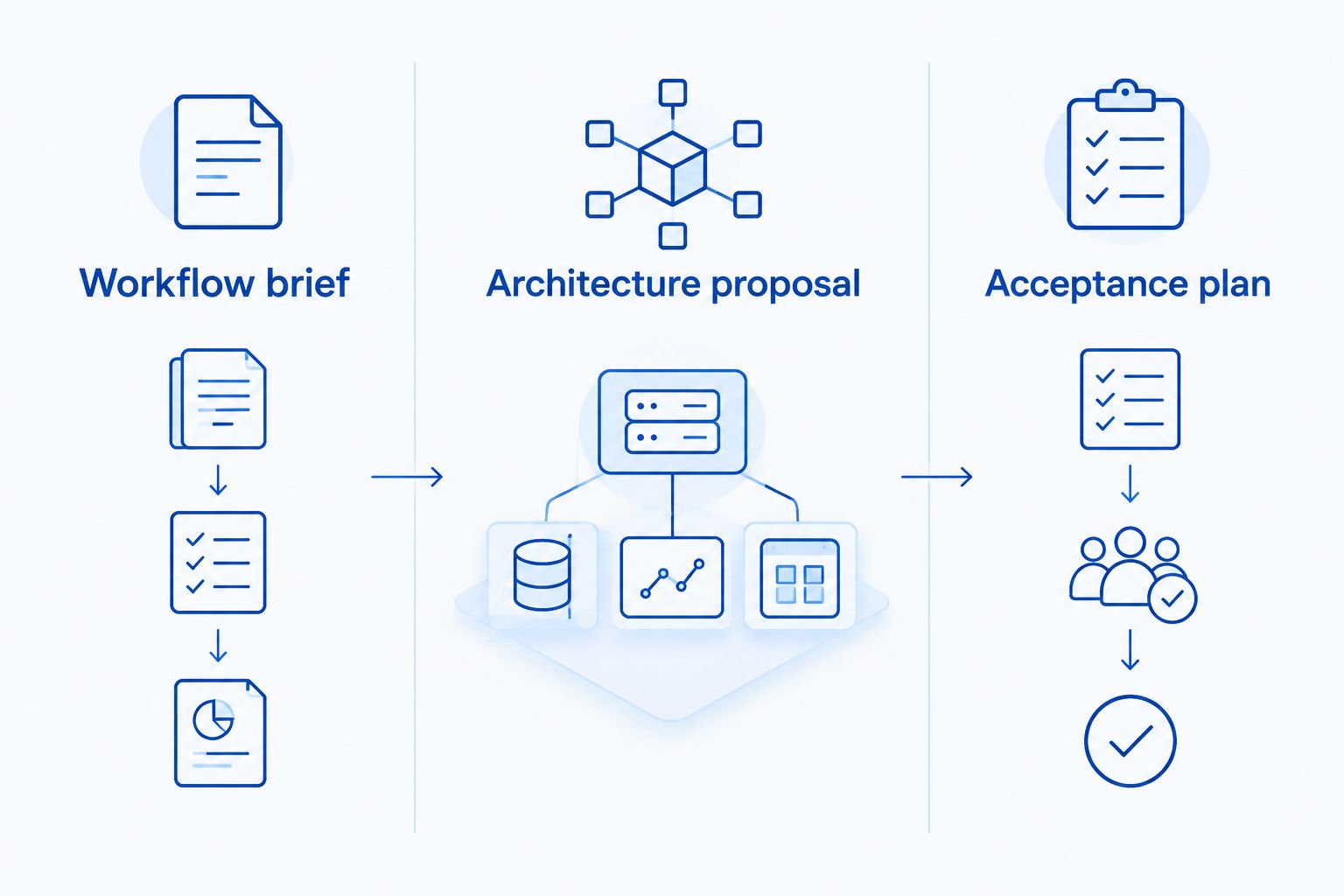
For your 2026 procurement process, request these 3 documents: a workflow brief, an architecture proposal, and an acceptance plan. They answer different questions and make vague proposals easier to reject.
- Workflow brief: Define the users, required actions, exceptions, and business owner.
- Architecture proposal: Identify applications, APIs, data ownership, identity controls, and deployment boundaries.
- Acceptance plan: Specify functional checks, security responsibilities, handover materials, and release approval.
Keep 1 accountable business owner for the decision process. Technical specialists still own their areas, but conflicting requirements need a clear route to resolution.
Include 2 paths for every critical workflow: successful completion and failure recovery. For a booking application, that means checking both a confirmed booking and a rejected request. For an account workflow, it means checking both permitted access and denied access.
Which enterprise software development company should you choose?
Choose the partner whose service scope matches the hardest part of your project. For a defined application across the platforms listed above, start with the application-focused agency. For engineering modernization, start with Thoughtworks; for broader transformation, start with Accenture.
Use IBM Consulting when hybrid-cloud integration drives the brief, EPAM when continuing product engineering drives it, and Globant when the customer journey drives it. If you cannot identify the dominant requirement, finish the workflow brief before requesting competing proposals.
FAQ
What's the best custom software development company for an enterprise?
The best company depends on the enterprise's dominant delivery requirement. Match defined application development, modernization, transformation, hybrid-cloud integration, product engineering, or customer experience to the relevant partner profile before comparing proposals.
Is an application agency better than a large consultancy?
An application agency fits a bounded software project; a large consultancy fits a broader consulting and implementation program. Choose by required responsibilities, not company size alone.
Can one partner build both web and mobile enterprise applications?
Yes, a development partner can offer both web and mobile services. Confirm which platforms, shared APIs, identity controls, and deployment responsibilities are included in the specific proposal.
What should an enterprise ask before hiring a software developer?
Ask for a workflow brief, an architecture proposal, and an acceptance plan. These documents establish what the application does, how it connects to existing systems, and what qualifies the delivery for approval.
How should enterprises compare software development proposals in 2026?
Compare every proposal against the same scope, dependencies, acceptance criteria, and handover requirements. Separate required deliverables from optional consulting work and future product changes.
Should an enterprise modernize existing software or replace it?
Choose only after mapping existing workflows, dependencies, and migration constraints. A replacement still needs data migration, integration planning, and a defined transition from the existing system.
What should be included in a software development handover?
Define source-code access, technical documentation, deployment instructions, configuration ownership, and maintenance responsibilities in the agreement. Assign internal owners before accepting the final delivery.
One last thing
Test the handover before approving the final release. Ask your internal team to follow the deployment instructions in an agreed test environment and identify unresolved dependencies. A software project is not fully transferred merely because the application works on the supplier's setup.